Weeds: Shiny geranium
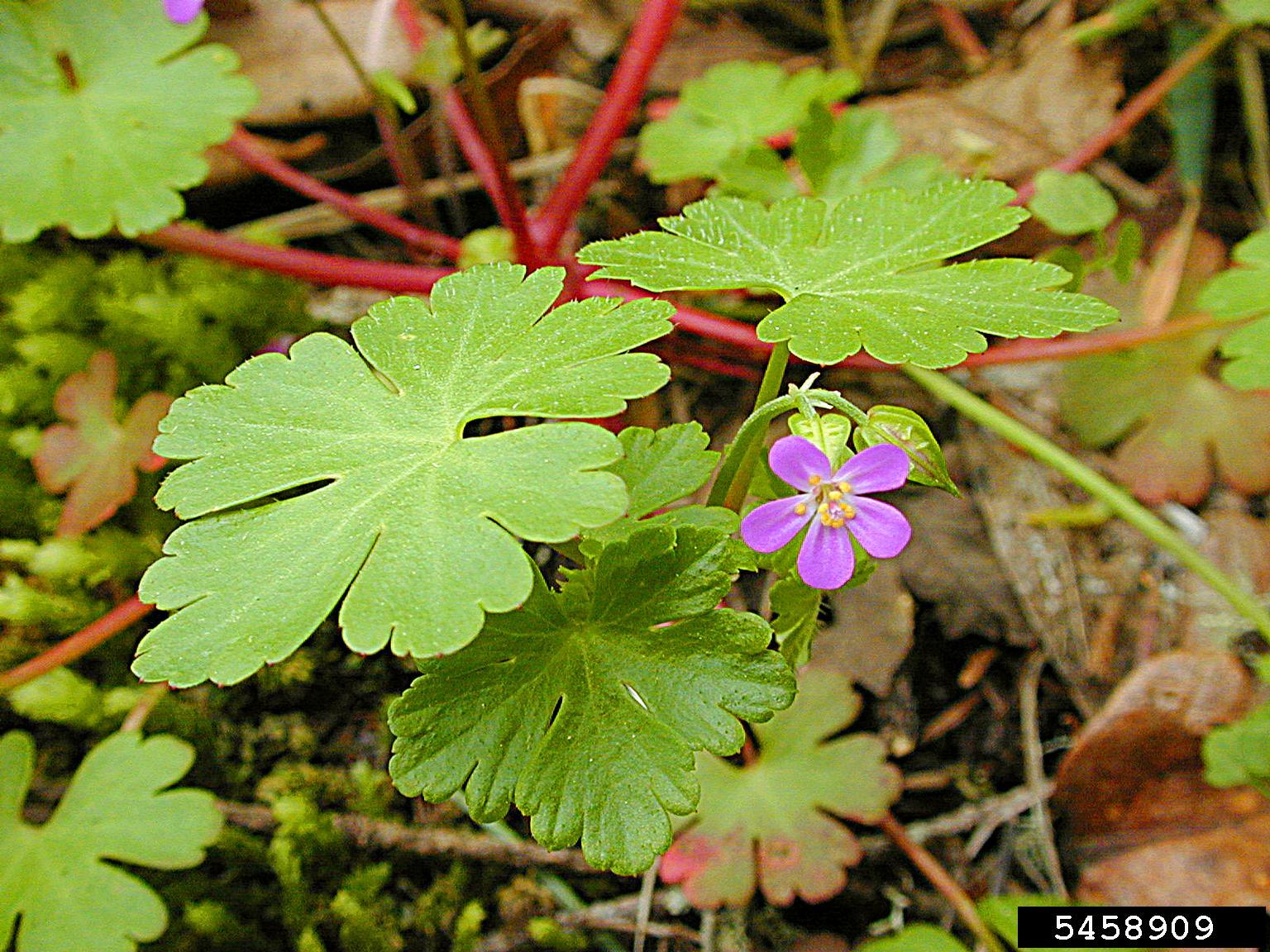
Photo by: Bruce Newhouse, Bugwood.org
Biology
Shiny geranium is an annual that sometimes grows as a biennial. It grows 6” to 18” tall with round, palmately lobed leaves about 1 ½” diameter. The shiny leaves have 5-7 lobes and grow on the end of reddish petioles (stems).
Small 5-petaled pink flowers usually appear in pairs with, or slightly above, leaves. Blooms appear in spring but can be found until late July. Like other plants in the geranium family, seed capsules have a long projection or “beak” which gives them the common name crane’s bill. Plants reproduce by seeds which are ejected from the capsule spreading them over a wide area. Seeds may also stick in animal fur or human clothing allowing them to travel greater distances.
Special information:
- Shiny geranium is a class B noxious weed and is on the Washington state quarantine list which prohibits transporting, buying, selling, or distributing it in the state.
- Visit the Washington State Noxious Weed Board – Shiny Geranium for more information about noxious weeds.
Habitat
Shiny geranium can tolerate shade or sun and is often found at the edge of forests, along roads or trails. It competes with natives and often overwhelms other plants with sheer numbers.
Management Options
See "Using Integrated Pest Management (IPM) in the Landscape" for successful problem management techniques.
Non-chemical Management
Select non-chemical management options as your first choice!
- Select non-chemical management options as your first choice!
- Cultivation (rototilling or hoeing) will eliminate plants, but the area should be monitored for regrowth.
- In smaller areas, hand-pulling or digging can be effective.
- Apply organic mulches, such as bark, compost, grass clippings, straw, and other materials, in a layer from 2 to 6″ thick for effective weed management.
Chemical Management
IMPORTANT: Always read and follow label directions when working with pesticides.
For more information on using pesticides visit :
- Make sure that the application site is on the pesticide label.
- Shiny geranium is not a problem in established turf areas
Landscape areas
- glyphosate
Turf areas
- No products listed.
Bare ground areas
Additional Images
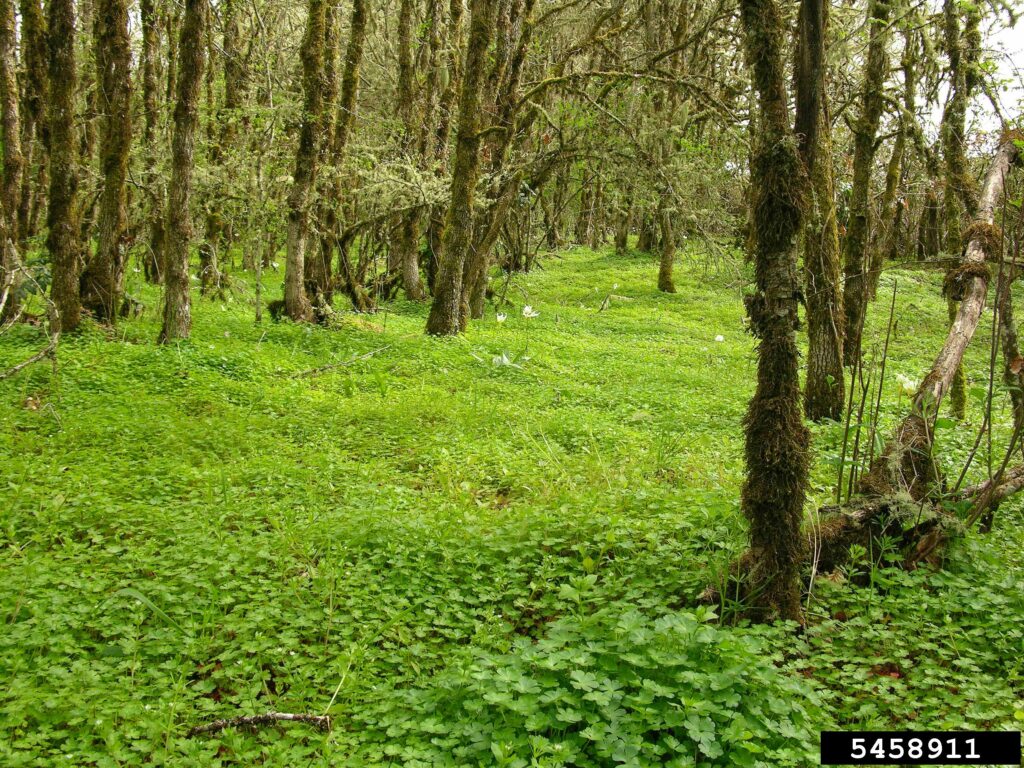
Photo by: Bruce Newhouse, Bugwood.org
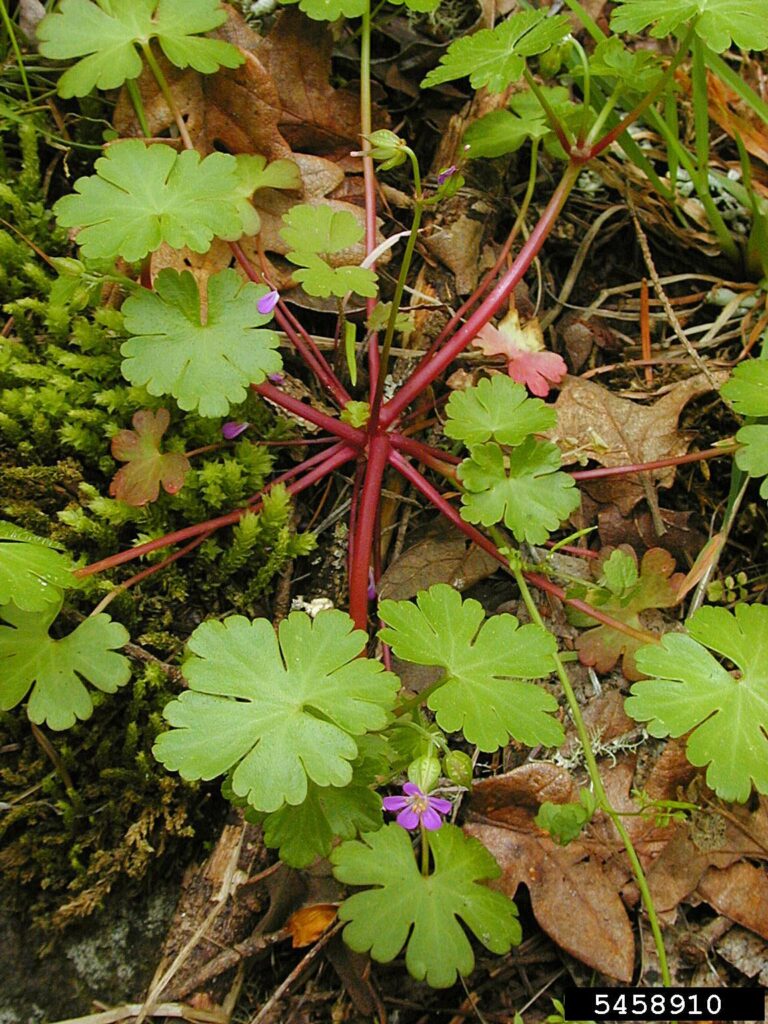
Photo by: Bruce Newhouse, Bugwood.org

WSU Extension programs and employment are available to all without discrimination.
Evidence of noncompliance may be reported through your local Extension office.