Weeds: Creeping bellflower
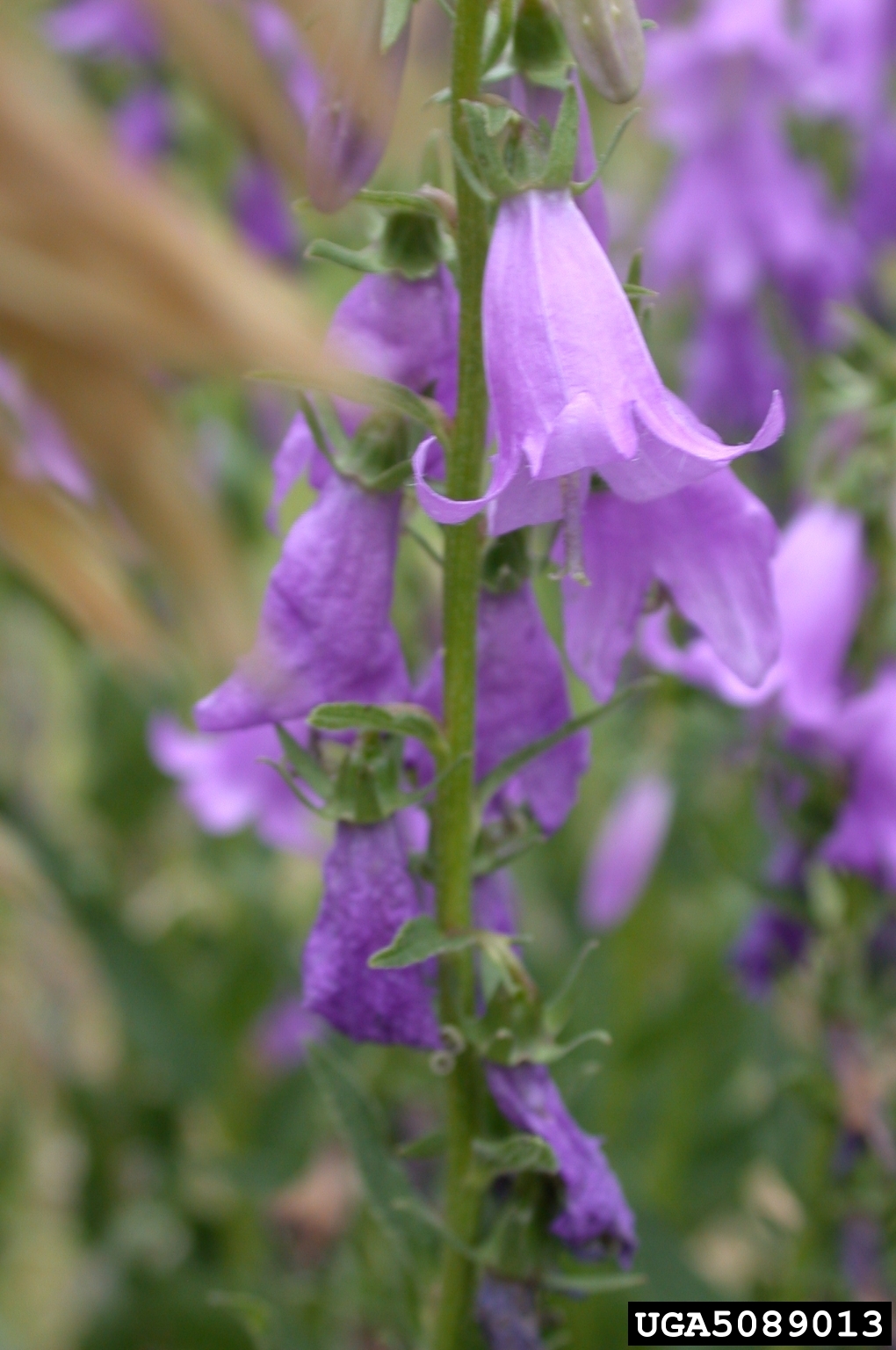
Photo by: Mary Ellen (Mel) Harte, Bugwood.org
Biology
Creeping bellflower is an herbaceous perennial plant that grows 12-40″ tall. It has multiple flowering stems of bell-shaped blue-purple flowers, usually with five-pointed lobes. Blooms are usually found on one side of the stem only and hang down. A single plant can produce up to 15,000 seeds.
Creeping bellflower is highly ornamental and can be mistaken for less invasive bellflower species. It is sometimes planted in managed landscapes where it becomes invasive once established.
Creeping bellflower also spreads via rhizomes and can be a significant weed in pastures and turfgrass. Mowing will remove flowering stems, but plants will still spread underground.
Basal leaves are 1-3″ long and heart shaped with a long petiole, while leaves on flowering stems are lance-shaped and have almost no petiole. They alternate on the flowering stem. All leaves have serrated (toothed) edges with hairs on the underside.
Creeping bellflower has both fibrous roots and more fleshy rhizomes that have been found as much as 12” deep. Most roots are found in the top 6” of soil. New plants can grow from rhizome segments as small as 1 cm. The root system often crowds out competing plants
While it is not a noxious weed, it is invasive and is listed on the Washington State Noxious Weed Board’s list of plants to monitor.
Management Options
See "Using Integrated Pest Management (IPM) in the Landscape" for successful problem management techniques.
Non-chemical Management
Select non-chemical management options as your first choice!
- Hand-pulling or digging is ineffective unless all roots and root segments are removed, which is difficult. Roots have been reported as much as 12″ below ground.
- Hoeing and tilling breaks up rhizomes causing many more plants to grow.
- Mowing prevents flowering but does not prevent plants from spreading.
- Mulching to block light to seeds will reduce seed germination but will not prevent established plants from growing.
Chemical Management
IMPORTANT: Always read and follow label directions when working with pesticides.
For more information on using pesticides visit :
- Make sure that the application site is on the pesticide label.
- Chemical control is more effective in the fall.
- Creeping bellflower is resistant to 2,4-D and quinclorac herbicides.
- May require repeated applications to achieve control
Landscape areas
- glyphosate
Turf areas
- products containing dicamba
Bare ground areas
Additional Images
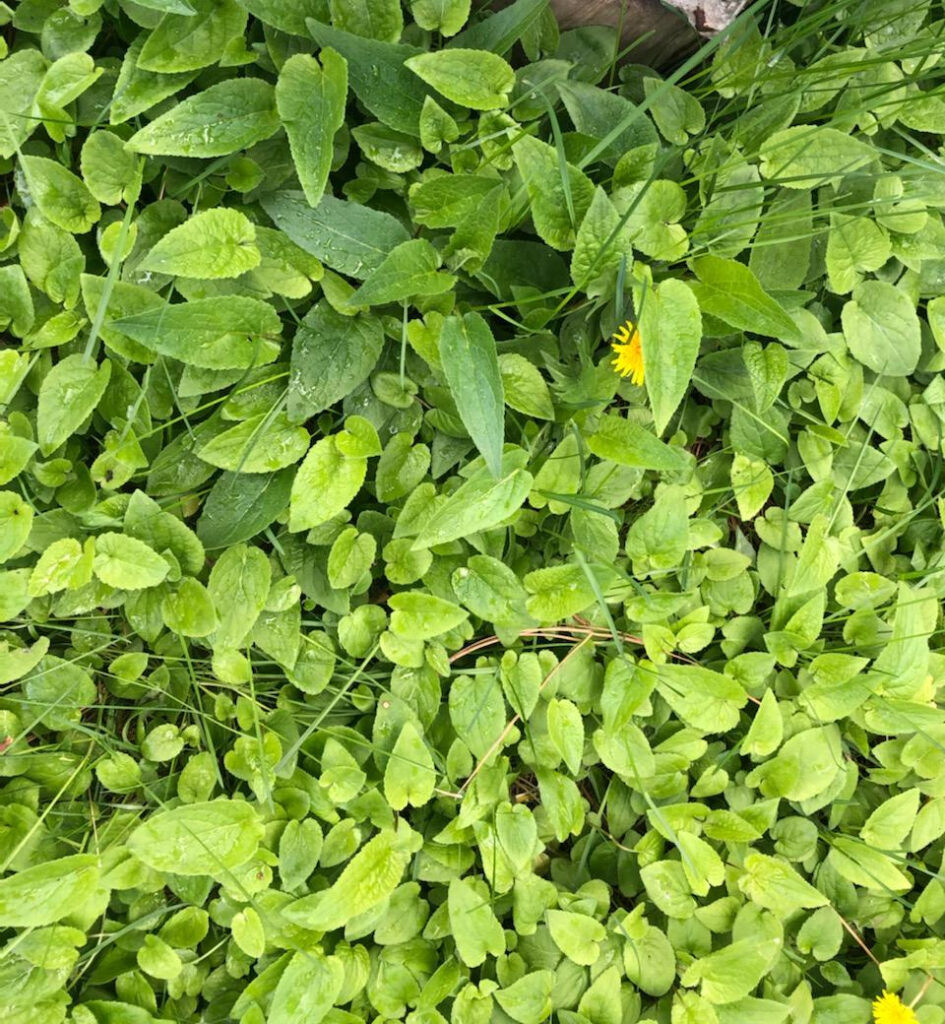
Photo by: Tim Kohlhauff, WSU Extension
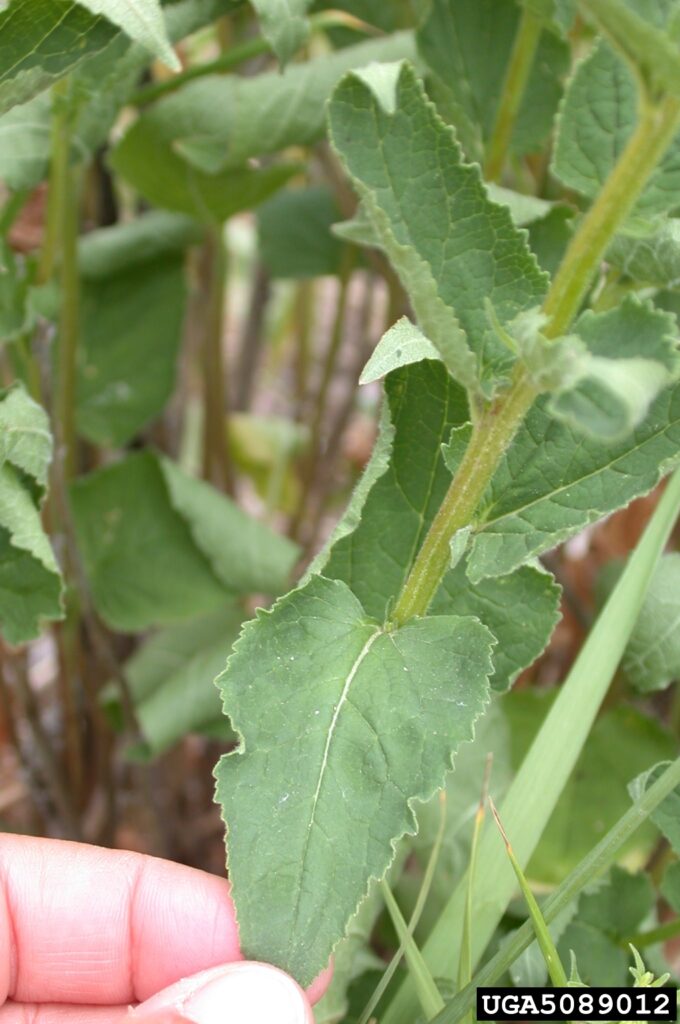
Photo by: Mary Ellen (Mel) Harte, Bugwood.org
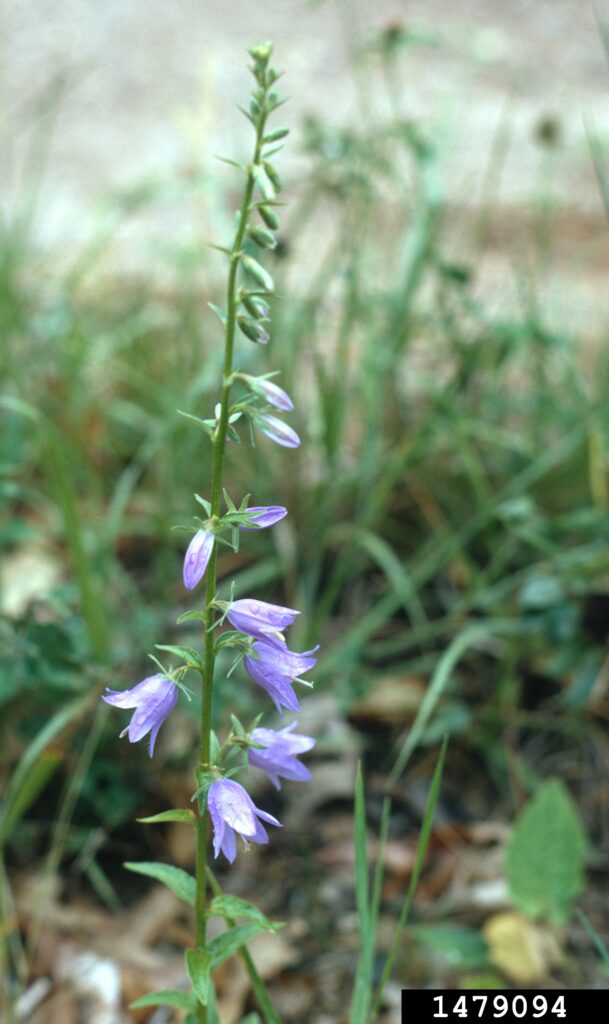
Photo by: Alex Katovich, Bugwood.org

WSU Extension programs and employment are available to all without discrimination.
Evidence of noncompliance may be reported through your local Extension office.