Weeds: Tree of Heaven
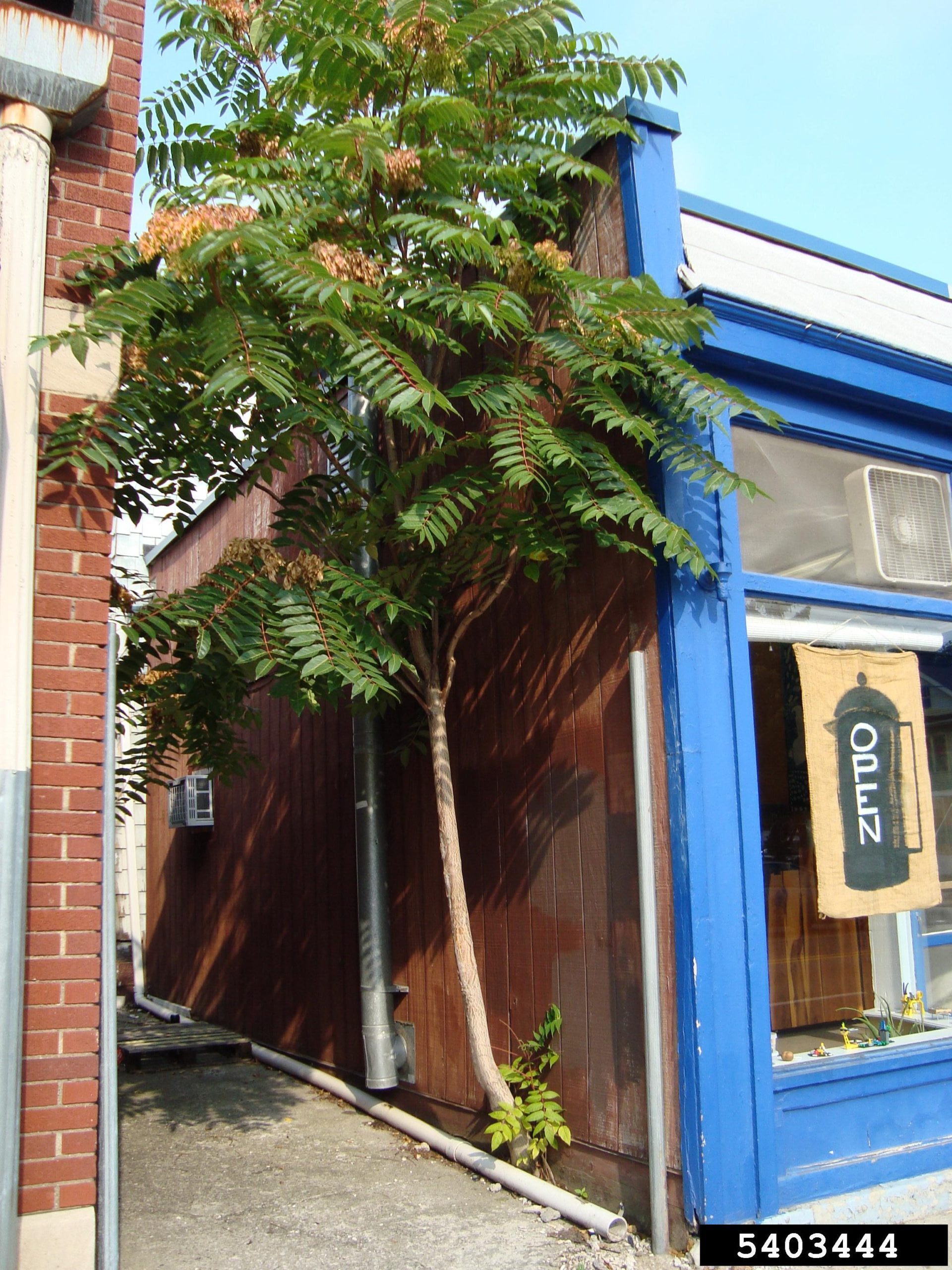
Photo by: Annemarie Smith, ODNR Division of Forestry, Bugwood.org
Biology
Tree of Heaven is a large, rapidly growing tree native to both northeast and central China, as well as Taiwan. It reaches 40-60 feet tall and 25-40 feet wide. It was introduced to the U.S. west coast around 1850 and has since become a problem due to its spreading nature and invasive root systems. New shoots will grow from the root system, often creating a grove of clones. It is difficult to control Tree of Heaven as it will thrive even in harsh conditions.
Flowers are light green to yellow and individually small (less than ½”) but seen in clusters up to 12” wide at the ends of branches. Trees are mostly dioecious, but some have both male and female flowers on the same plant. Male flowers have an unpleasant odor. Fruits have a papery wing about 1 ½-2” long by ½” wide and slightly twisted. The fruit matures in late summer, turning from green to brown and persisting on the tree through the winter. Seeds are wind dispersed but usually fall close to the mother plant.
Leaves grow 18-24″ long but can be longer. They are pinnately compound with 13-25 pointed leaflets. Crushed leaves have an odor described as “pungent peanut-butter,” or “garbage-like.”
Tree of Heaven has an upright to spreading growth habit and is often surrounded by smaller stems growing from the root system. Plants spread by seeds and by root suckers; they also resprout from cut stumps. They are reported to have allelopathic chemicals in leaves and roots that limit the growth of other plants, but this may actually be due to root competition and shade cast by Tree of Heaven.
Trees may be confused with black walnuts, sumac species, or some hickory species. However, these look-alikes have serrated leaflet margins and fruits that are very different from Tree of Heaven.
Special information:
- Tree of Heaven is a class C noxious weed in Washington and recommended for control.
- Visit the Washington State Noxious Weed Board – Tree of Heaven for more information about the Black Locust as a noxious weed.
- Tree of Heaven is also the preferred host of the invasive insect, spotted lanternfly (Lycorma delicatula). Spotted lanternfly has a large host range that includes many native and crop plants in Washington. Removal of Tree of Heaven not only removes an invasive plant but also limits the ability of an invasive insect to establish in Washington.
- For more information see Spotted Lanternfly | Hortsense for more information.
- Some sensitive individuals have developed skin irritation or rashes from contact with Tree of Heaven
Habitat
Tree of Heaven is extremely adaptable to most habitat types from woodlands and forests to riparian areas to disturbed sites and urban areas with minimal root space. It is extremely drought tolerant.
Management Options
See "Using Integrated Pest Management (IPM) in the Landscape" for successful problem management techniques.
Special Notes about managing Tree of Heaven
- Given the size of these plants and the difficulty of control, homeowners may have difficulty achieving satisfactory results by themselves.
- Hiring a commercial pesticide applicator for herbicide applications and a certified arborist for large tree removal is highly recommended.
Non-chemical Management
Select non-chemical management options as your first choice!
- Select non-chemical management options as your first choice!
- Non-chemical control of Tree of Heaven requires persistence. The site should be monitored for regrowth from cut stumps and root systems. New stems can appear up to 50 feet from the parent tree.
- Hand pulling or digging seedlings is effective only when all roots are harvested. Once the root system has established and begun to spread, hand pulling is ineffective.
- Cutting down trees alone is ineffective because plants resprout from roots.
- Shade limits the growth of Tree of Heaven and may slow establishment but is not a reliable control, especially for established trees.
- Consult with a certified arborist if a mature Tree of Heaven is to be removed. Cutting Tree of Heaven limits seed production but stimulates shoot growth from both the cut stump and the roots, so it is not a reliable control. It does, however, remove a fall hazard if the area is to be treated with chemicals.
Chemical Management
IMPORTANT: Always read and follow label directions when working with pesticides.
For more information on using pesticides visit :
- Make sure that the application site is on the pesticide label.
- Homeowners should not make foliar applications to trees over 10 ft. tall but should consult a commercial pesticide applicator.
- Better control of Tree of Heaven may be gained using special application methods including stem injection or frill-and-spray. These may require a commercial pesticide applicator.
- Herbicide applications are most effective between mid-summer and fall color.
- Do not apply herbicides to suckers if the mother tree is not on your property.
- The active ingredient triclopyr may have some restrictions in the state of Washington. Review the label carefully for any restrictions listed.
Landscape areas
- triclopyr
Turf areas
- No products listed.
Bare ground areas
Additional Images
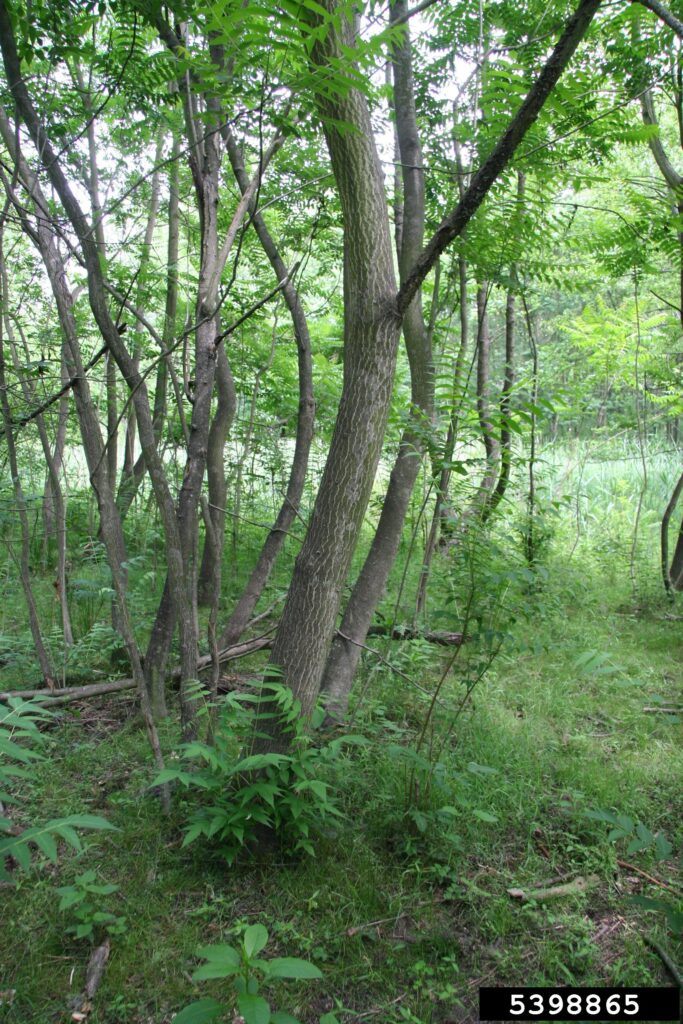
Photo by:Robert Vidéki, Doronicum Kft., Bugwood.org
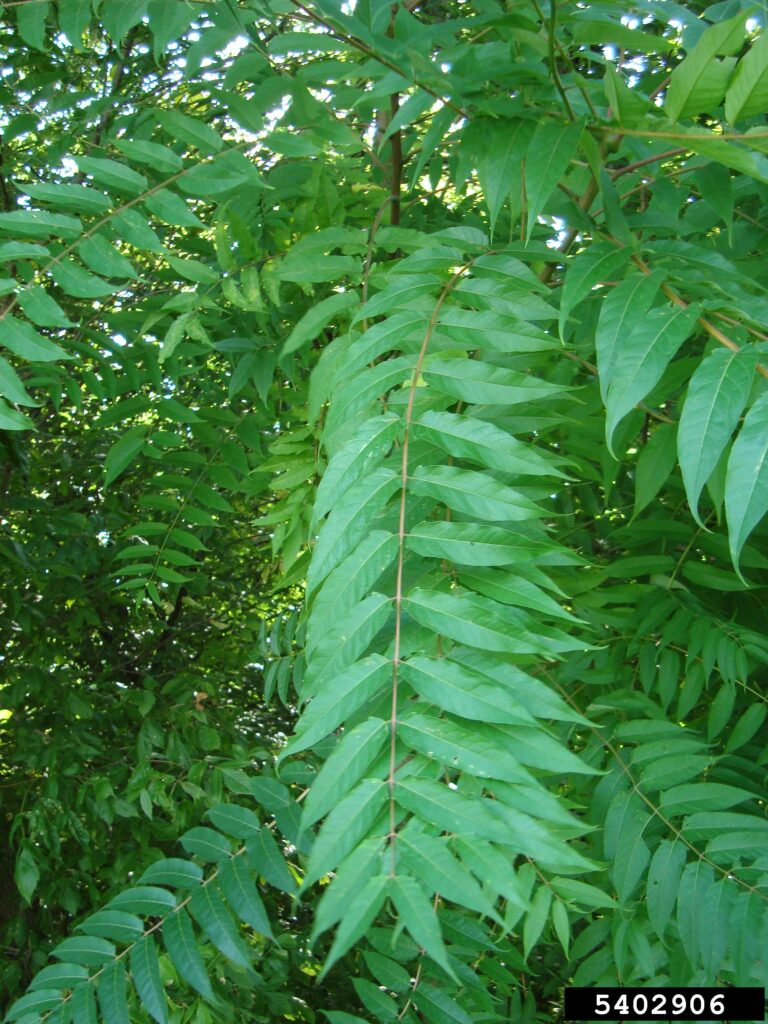
Photo by: Annemarie Smith, ODNR Division of Forestry, Bugwood.org
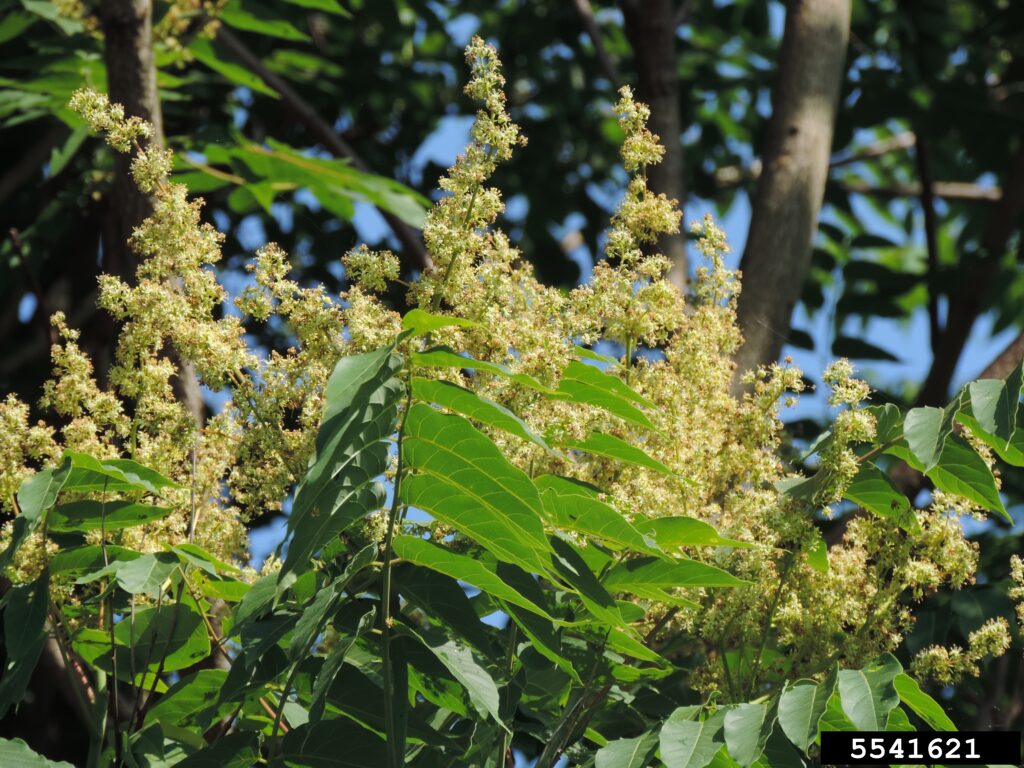
Phot by: Richard Gardner, Bugwood.org
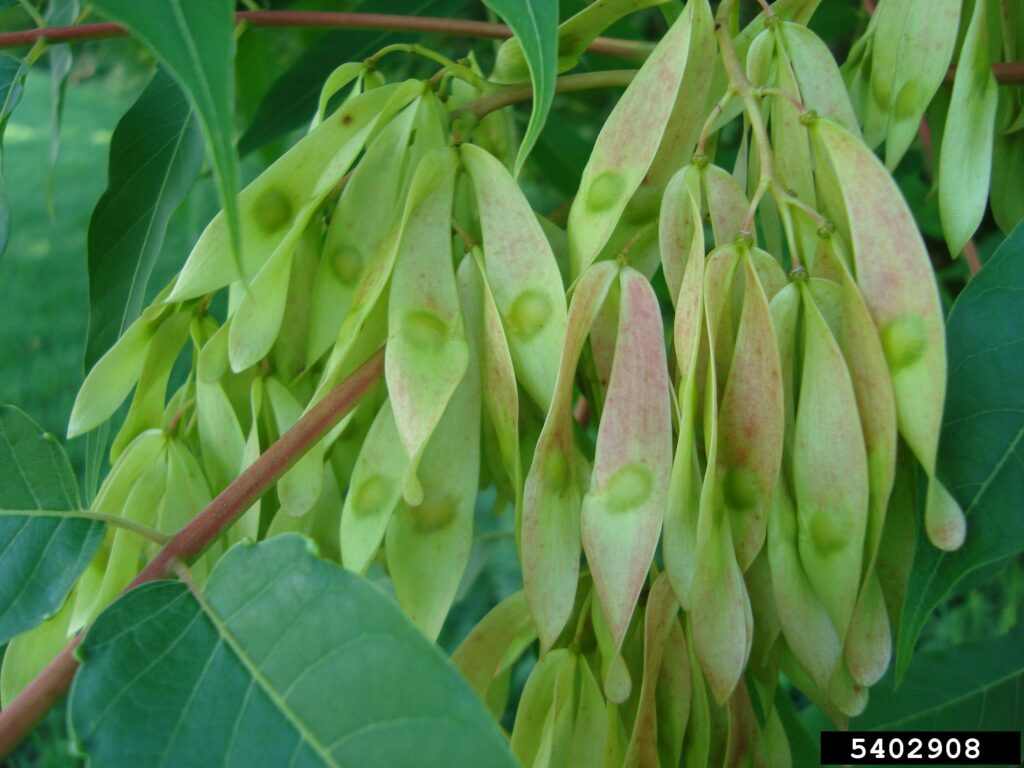
Photo by: Annemarie Smith, ODNR Division of Forestry, Bugwood.org
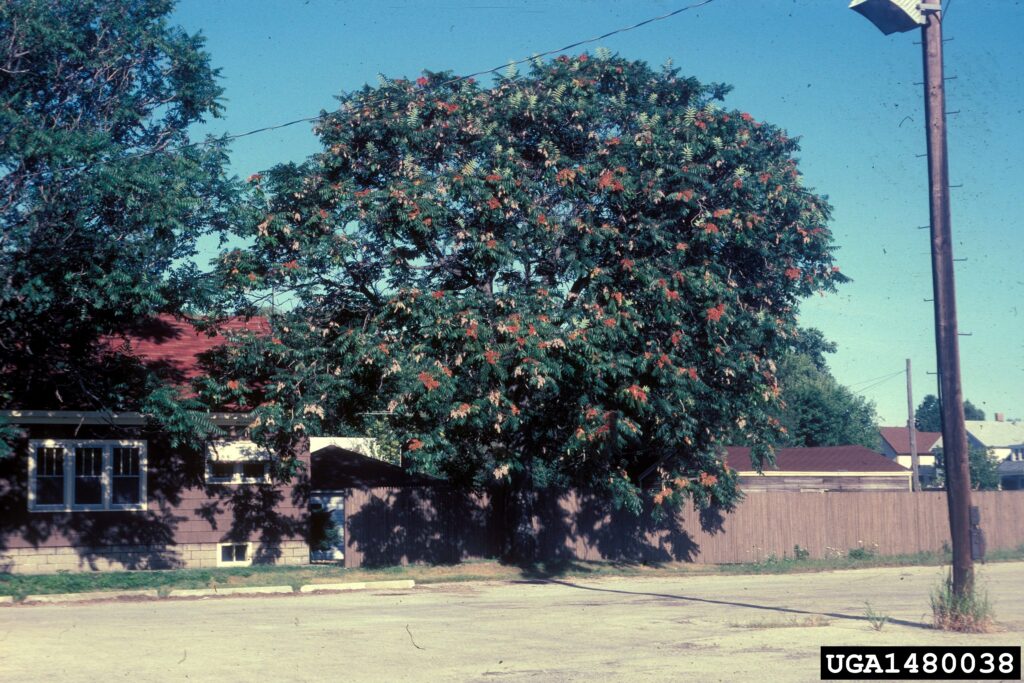
Photo by: Richard Webb, Bugwood.org
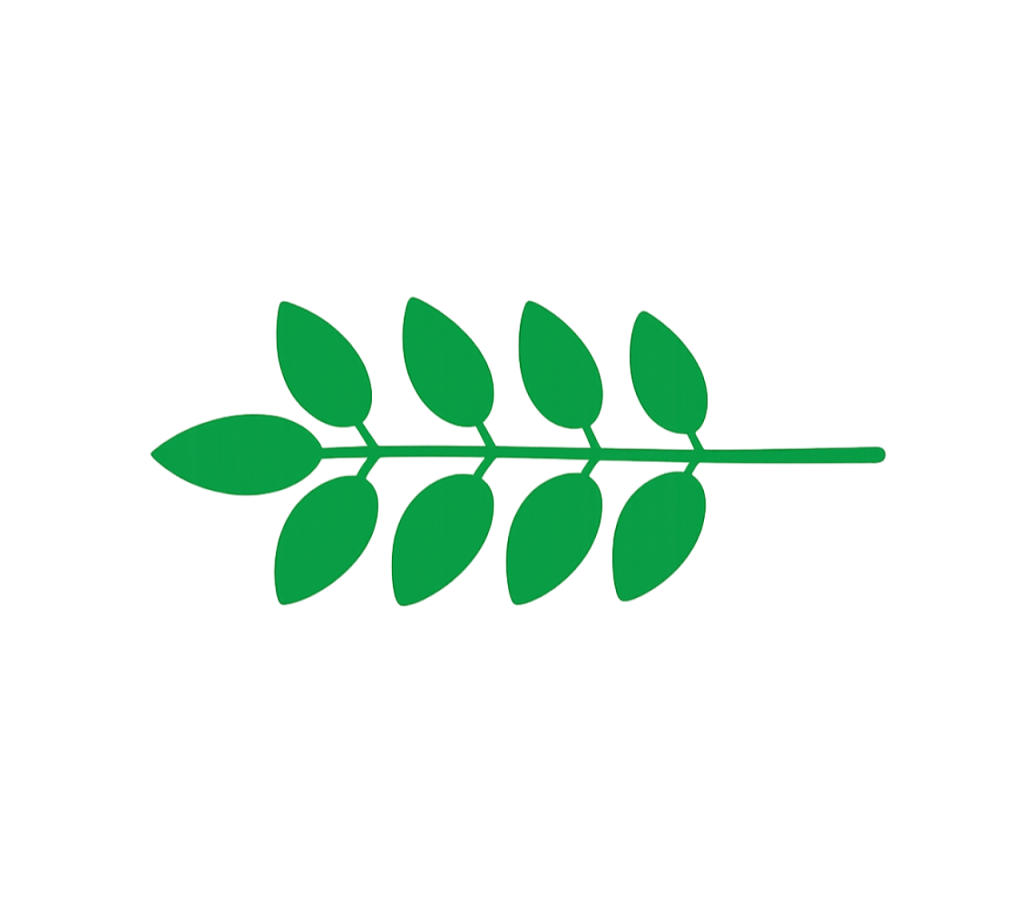
Leaf image courtesy of Eric Bajart

WSU Extension programs and employment are available to all without discrimination.
Evidence of noncompliance may be reported through your local Extension office.