Spotted Lanternfly
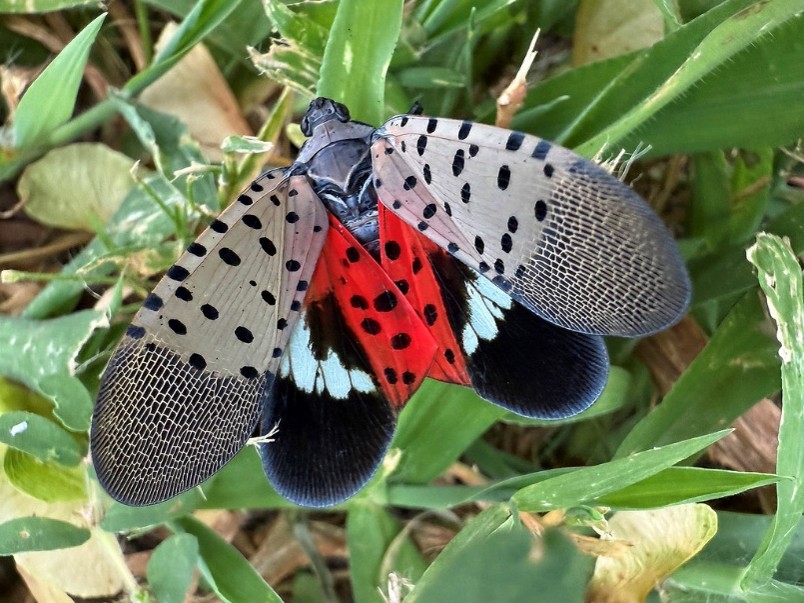
Image credit: ©Allen Browne/iNaturalist
Biology
The spotted lanternfly (Lycorma delicatula) is an invasive planthopper, native to Asia, that may feed on a wide variety of desired plants—notably hops, stone fruits, grapevines, and hardwoods.
While there are no confirmed sightings in Washington State, any reported sighting is investigated. They’re present in at least 19 states and the District of Columbia so far. Close monitoring by USDA APHIS and WSDA continues to prevent establishment of these insects that would threaten Washington crops and forests.
What do they look like?
Spotted lanternflies vary in appearance, depending on their life stage. Juvenile spotted lanternflies are wingless. Their bodies are black with white spots and turn mostly bright scarlet (with white spots and black areas) as they mature toward adulthood.
Adults feature grayish-brown forewings with black spots. The tips of the forewings have bands of speckling. Their hindwings are mostly bright scarlet with black spots but transition to black and white bars toward the wing tips.
At rest, the insect folds its wings like a tent. The adult abdomen is yellow with black bars. They’re about 1 inch long and ½ inch wide.
What is their life cycle?
Spotted lanternflies have three life stages: egg, nymph, and adult. They undergo incomplete metamorphosis, or a gradual change prior to adulthood.
Spotted lanternflies lay egg masses of 30 to 50 eggs. These may appear on smooth surfaces like trees, stones, bricks, and human items like vehicles, equipment, or children’s toys. The egg mass may be uncovered or smeared with a gray putty-like substance, so it looks like cracked mud. Eggs are laid in the fall prior to the first freeze and then overwinter until spring.
Juvenile spotted lanternflies, or nymphs, emerge from spring through summer. The nymphs are black with white spots. They complete three growing stages, or instars.
During the fourth instar, the nymphs become bright scarlet with white spots and black highlights.
Mature nymphs undergo a final molt to reach winged adulthood in late summer or early fall.
Where do you find them?
In places with spotted lanternfly infestations, egg cases may be found through fall, winter, and spring. Nymphs emerge in the spring and persist through summer. Adults may be observed from late summer through fall.
Spotted lanternflies feed on many kinds of plants. Nymphs and adults use piercing-sucking mouthparts to drill into plant tissue and slurp out sugary sap. As they do, they excrete a shiny, sticky substance called honeydew. It gives off a rotten or vinegary smell as it ferments. Honeydew draws in other insects (like ants) and promotes the growth of sooty mold.
These problems—plus the direct injury to the tissue—damage plants, sometimes fatally.
Adults need energy to mate and produce eggs, so they consume more sap than nymphs. They also produce more honeydew. While adults feed on many plants, they can pierce woodier plants than nymphs and prefer tree-of-heaven (Ailanthus altissima) or grapevines.
Adults often feed in swarms and may produce so much honeydew that it rains down from the tree canopy. The direct and residual damage may be substantial.
Why are they important?
Spotted lanternflies are a serious invasive pest in the states and regions where they’ve been found. If they ever invade Washington state, they could cause significant harm to important crops and forest products. These include hops, grapevines, stone fruits, and hardwoods.
Check out this intro to the spotted lanternfly, produced by WSU CAHNRS.
- Meet the Bug – Spotted Lanternfly. See it? Report it! (7min, posted 2023)
Learn more about the spotted lanternfly’s preferred plant, Tree-of-Heaven, which is a noxious weed in Washington state.
- Tree-of-Heaven is an invasive weed! Identify it. Report it. (8.5min, posted 2023)
Want to know more? Here’s the Pacific Northwest plan for keeping spotted lanternfly out of our areas.
- Washington State Action Plan for Spotted Lanternfly Webinar (2hr-25min, posted 2023)
Management Options
See "Using Integrated Pest Management (IPM) in the Landscape" for successful problem management techniques.
Non-chemical Management
Select non-chemical management options as your first choice!
- You can help Washington state keep an eye out for this invasive pest. If you see a possible spotted lanternfly in Washington state, report it to WSDA.
- Snap a photo and note the precise location. If you can, collect the insect or egg mass. Spotted lanternflies don’t bite or sting, so you can safely pop it into a baggie and store it in your freezer.
- Report on the Spotted Lanternfly Report From
- Email Pest@agr.wa.gov
- Call 1-800-443-6684
- Spotted lanternflies seen in other places should be reported to the local department of agriculture.
- Investigate the current distribution map for spotted lanternfly and what other insects look similar.
Chemical Management
IMPORTANT: Always read and follow label directions when working with pesticides.
For more information on using pesticides visit :
- See a partial list of approved pesticides approved for home use in Washington State
Approved Pesticides
If you choose to use a pesticide, some examples of products that are legal in Washington are listed below. Some products are labeled for just INDOOR or just OUTDOOR use, or may allow both uses. Be sure to choose a product appropriate for your situation. Always read and follow all label directions.
Additional Images
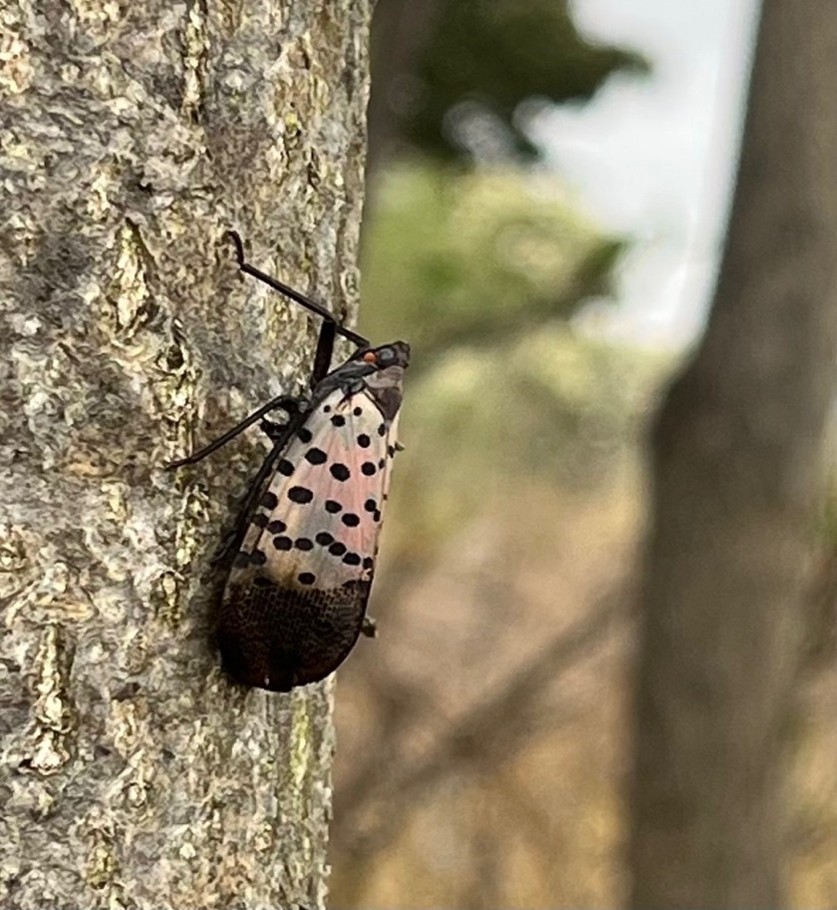
Photo credit: ©mmsorensen/iNaturalist
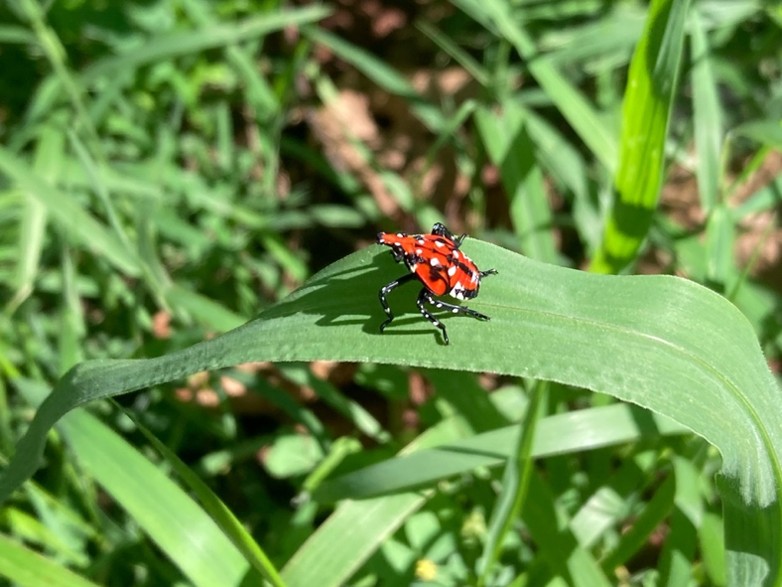
Image credit: ©bombycilla/iNaturalist
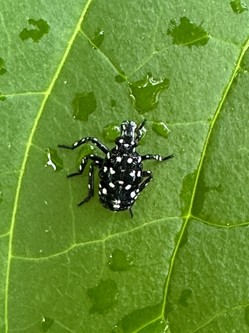
Image credit: ©tmcelrath/iNaturalist
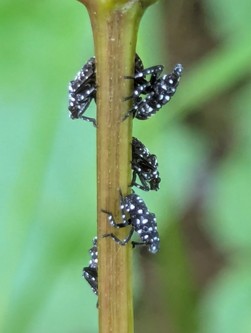
Image credit: ©theratgod/iNaturalist
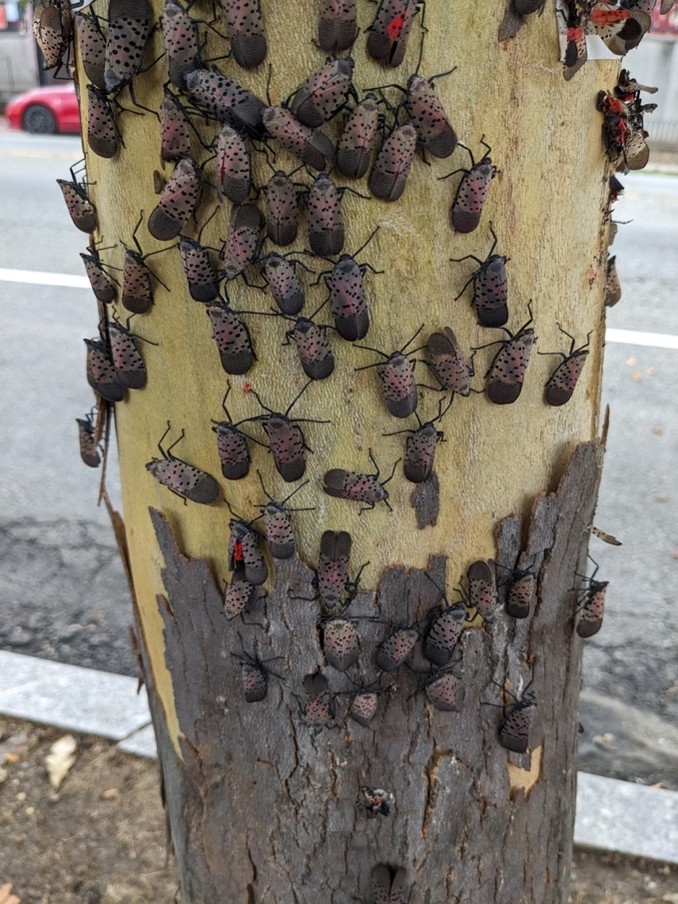
Image credit: ©jannyrocks/iNaturalist
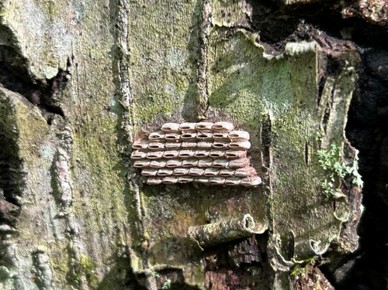
Image credit: ©andreakautz/iNaturalist
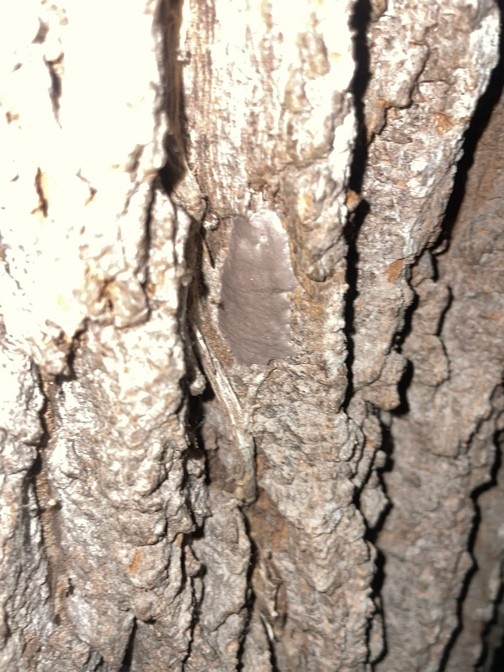
Image credit: ©orionid/iNaturalist
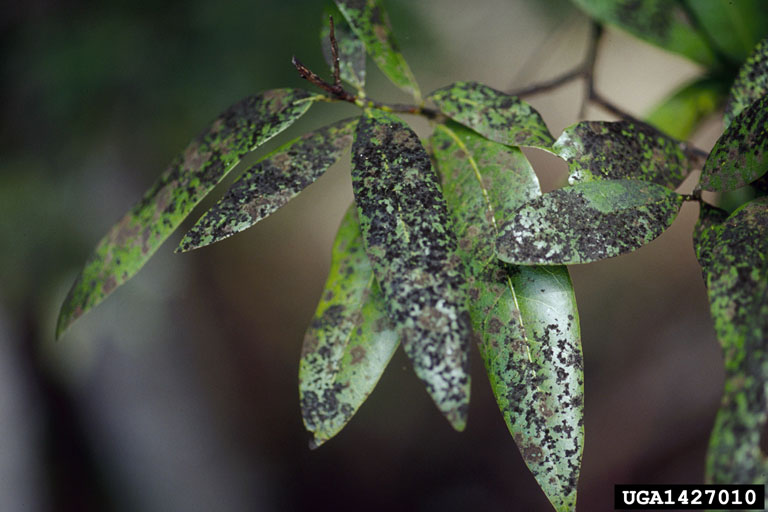
Image credit: ©Joseph O’Brien/USDA/bugwood
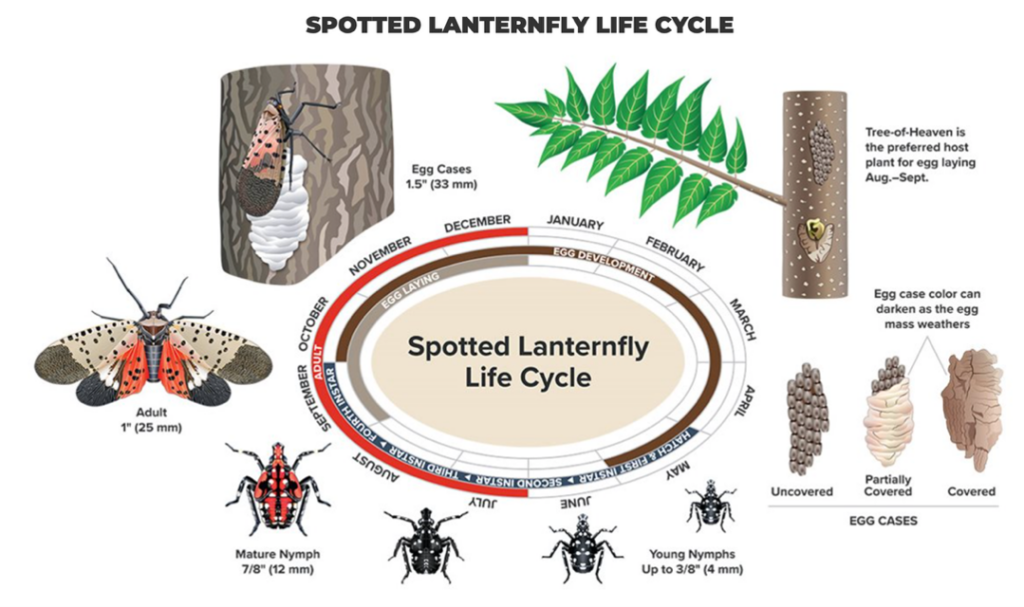
Image credit: Gerald Steffen, CAHNRS Communications
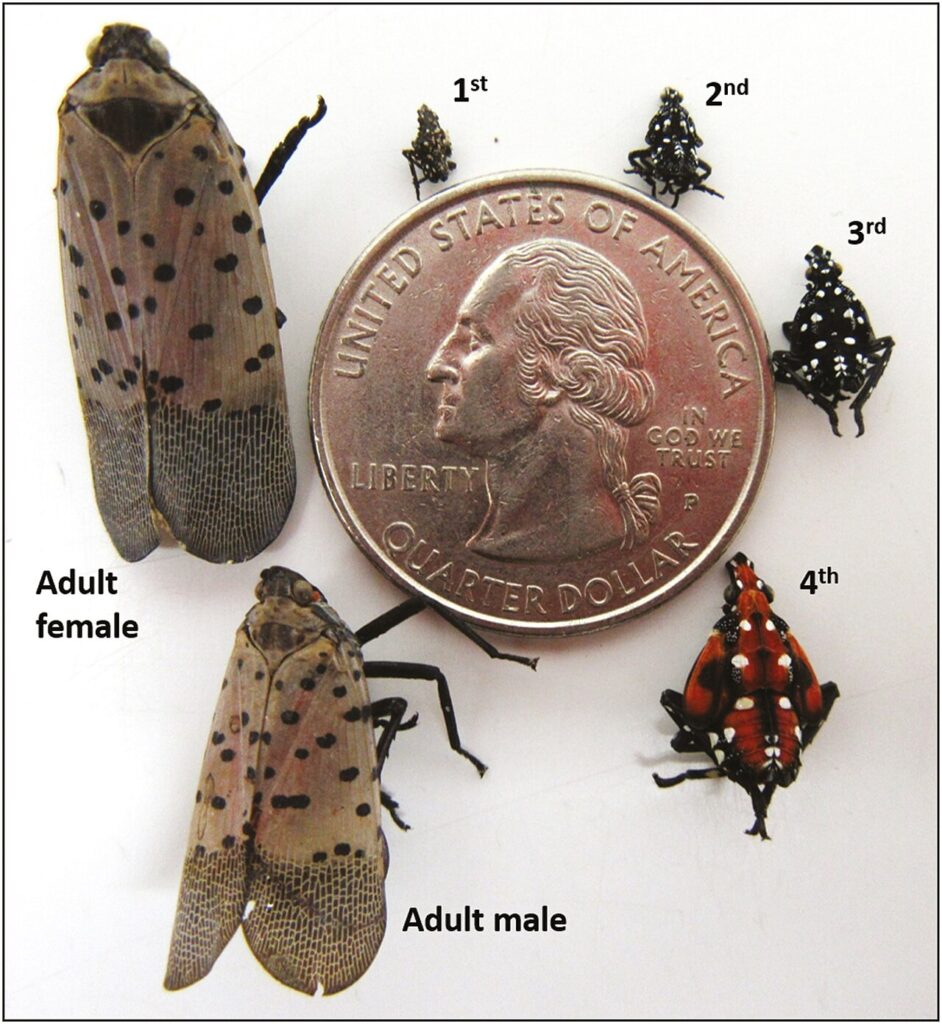
Photo credit: iNaturalist - US Government employee(s) and is in the public domain in the US.

WSU Extension programs and employment are available to all without discrimination.
Evidence of noncompliance may be reported through your local Extension office.