Lacewings

Photo by: D.G. James
Biology
Adult lacewings are delicate-looking slender-bodied creatures (1/2 to 1 inch) that fly weakly with lacy, netted wings. There are green lacewings and brown lacewings with the former most frequently seen in gardens. Brown lacewings are generally smaller (1/4 to 1/2 inch) and active earlier and later in the season than green lacewings.
Green lacewings lay their eggs singly, each on a long hair-like stalk, presumably keeping the egg away from substrate-based predators. Although adults of some lacewings are predatory, it is lacewing larvae that provide most of the pest control services given by these unique insects.
Lacewing larvae like lady beetle larvae, resemble little alligators but differ by having enlarged sickle-shaped mouthparts that extend forward from the head. These mouthparts puncture prey and suck out their juices.
A garden with abundant lacewings is almost certain to be a well-balanced habitat, since these predators thrive best in undisturbed, pesticide-free environments.
Prey or Pest Targeted
Mites, aphids, leafhoppers, whiteflies, thrips, mealybugs, caterpillar, insect eggs, scale insects
Attracting and Keeping Natural Enemies
and Pollinators in Your Yard and Garden
- Native plants provide essential resources.
- Native flora also provides natural overwintering sites.
- Natural dispersion from nearby habitats ensures visitation.
- Some kinds of beneficial insects predatory mites are commercially available.
- Avoid regular use of synthetic, broad-spectrum pesticides.
- Infrequent use of certain narrow-spectrum pesticides is more compatible with some beneficials.
- Extensive lawns are also not conducive to attracting beneficial insects.
Management Options
See "Using Integrated Pest Management (IPM) in the Landscape" for successful problem management techniques.
Chemical Management
IMPORTANT: Always read and follow label directions when working with pesticides.
For more information on using pesticides visit :
- None recommended
Additional Images

Photo by: D.G. James
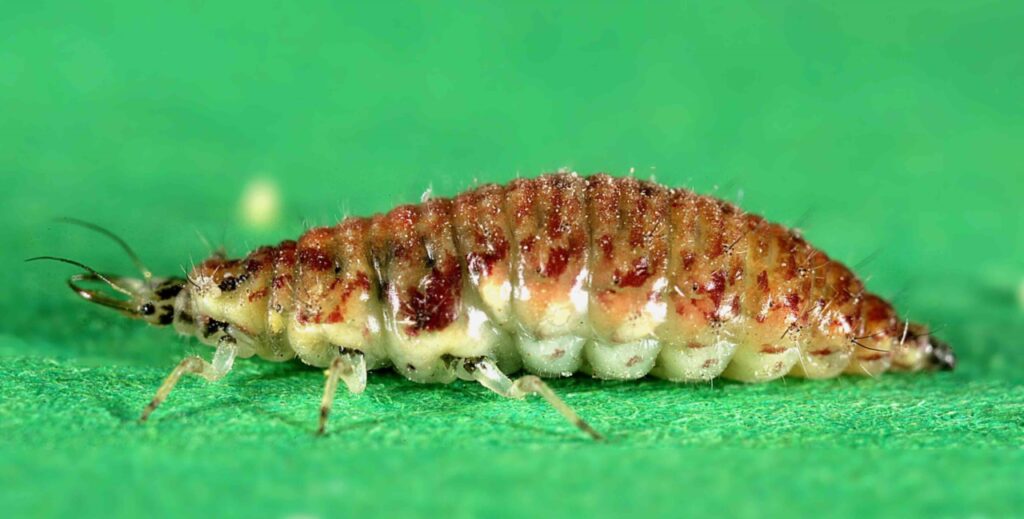
Photo by: D.G. James

WSU Extension programs and employment are available to all without discrimination.
Evidence of noncompliance may be reported through your local Extension office.