Predatory Beetles : Lady beetles

Photo by: D.G. James
Biology
Lady beetles are industrious predators of not only aphids but also many other soft bodied arthropods like mites, thrips, insect eggs, scale insects and mealybugs.
There are about 90 species of lady beetles in the Pacific Northwest. The five species most likely to be seen in Washington gardens include the transverse, convergent, seven-spot, multi-colored and mite-eating lady beetles.
Convergent lady beetle (Hippodamia convergens) The adult is approximately 1/4 inch in length and more oval-shaped than round. The wing covers are orange to red, typically with 12 to 13 black spots. However, the number of spots is variable and some individuals have none. The pronotum is black with two converging white stripes and white edges. The small head is almost covered by the front of the thorax.
The alligator-shaped larva is dark gray-blackish blue with two small, indistinct orange spots on the pronotum and four larger ones on the back. The pupa is orange and black and often attached to the upper surface of a leaf.
Convergent lady beetles are native and common in gardens. They are also available commercially. Females lay 200 to 500 eggs, which hatch in five to seven days. Development through larval and pupal stages takes three to six weeks depending on temperature and food availability, with one to two generations a season.
The largest populations occur during spring; convergent lady beetles tend to disappear when weather becomes hot, especially in eastern Washington. Field evidence suggests that populations migrate to cooler, high-elevation areas in summer and aestivate (summer dormancy). Congregations of millions of inactive convergent lady beetles may be found during July-August in the Blue Mountains of northeastern Oregon and southeastern Washington. Most of these beetles overwinter in the mountains before migrating back to valley areas in spring.
Lady beetles are extremely important to natural suppression of aphids, leafhoppers, mites, mealybugs and scale insects. Gardeners should encourage all lady beetles to colonize and reside in their gardens. Attraction and conservation of lady beetles is more effective and sustainable than the purchase and introduction of lady beetles, which tend to rapidly leave gardens after release.
Mite-eating lady beetles are very useful for good biological control of spider mites. One or two Stethorus beetles are usually sufficient to control an early-season mite “hot spot,” preventing it from spreading into a larger outbreak.
Prey or Pest Targeted
Lady beetles are industrious predators of not only aphids but also many other soft bodied arthropods like mites, thrips, insect eggs, scale insects and mealybugs.
Attracting and Keeping Natural Enemies
and Pollinators in Your Yard and Garden
- Native plants provide essential resources.
- Native flora also provides natural overwintering sites.
- Natural dispersion from nearby habitats ensures visitation.
- Some kinds of beneficial insects predatory mites are commercially available.
- Avoid regular use of synthetic, broad-spectrum pesticides.
- Infrequent use of certain narrow-spectrum pesticides is more compatible with some beneficials.
- Extensive lawns are also not conducive to attracting beneficial insects.
Management Options
See "Using Integrated Pest Management (IPM) in the Landscape" for successful problem management techniques.
Chemical Management
IMPORTANT: Always read and follow label directions when working with pesticides.
For more information on using pesticides visit :
- None recommended
Additional Images

Photo by: D.G. James

Photo by: D.G. James

Photo by: D.G. James

Photo by: D.G. James

Photo by: D.G. James

Photo by: D.G. James

Photo by: D.G. James

Photo by: D.G. James

Photo by: D.G. James
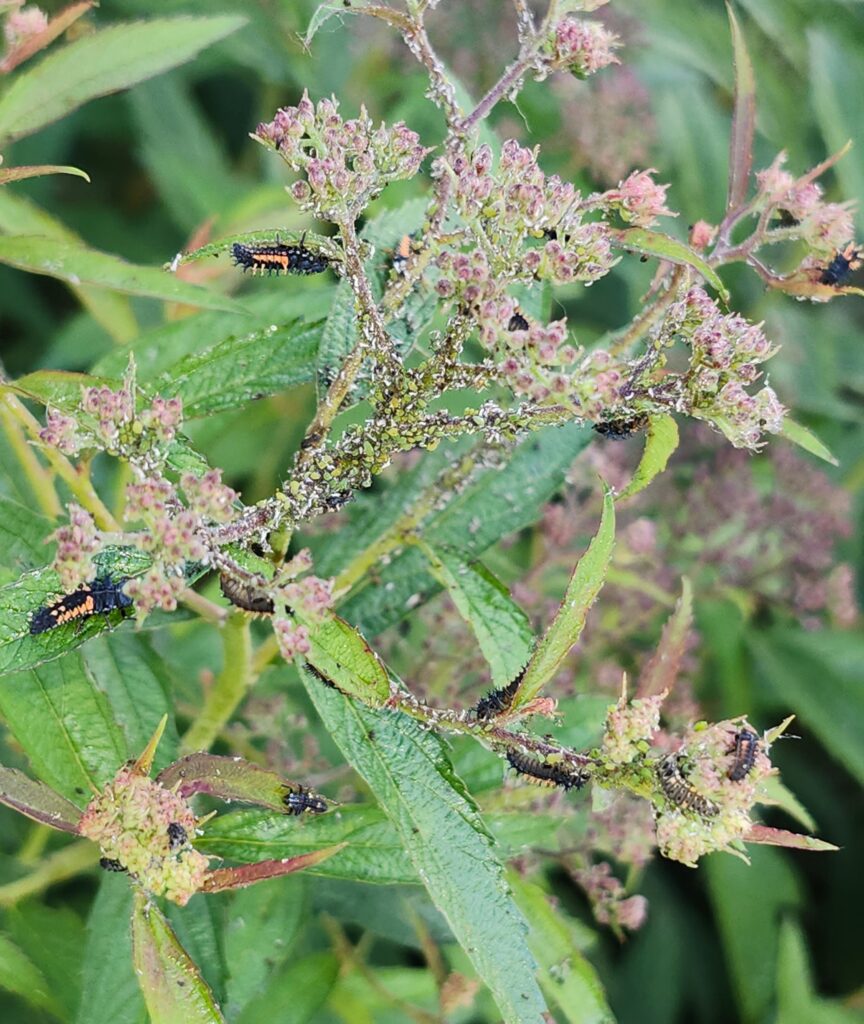
Photo by: Craig Lawrence - WSU Extension Master Gardener

WSU Extension programs and employment are available to all without discrimination.
Evidence of noncompliance may be reported through your local Extension office.